The real secret to eating healthy on the road? It all starts before you even pack your bags. A little proactive planning back home is the difference between sticking to your goals and falling into the trap of convenient, unhealthy options.
By figuring out your destination's food scene, booking the right kind of place to stay, and packing a few smart essentials, you can keep your health on track without missing out on the fun of travel.
Your Pre-Trip Plan for Healthy Eating Success
The groundwork for a healthy trip is laid long before you're heading to the airport or loading up the car. This isn't about making strict rules that suck the joy out of your vacation; it's about setting yourself up for success with easy, smart choices.
A bit of forethought puts you in the driver's seat. Instead of showing up exhausted and starving, grabbing the first thing you see, you’ll already have a plan. This is more important than ever, especially since food has become such a huge part of the travel experience itself.
Did you know that by 2025, nearly 1 in 5 travelers will plan a trip just to try new foods? For a lot of people, food is the second-biggest budget item right after their hotel. It just goes to show how much our meals shape our trips. You can read more about these trends in Hilton's 2025 report.
Research and Reconnaissance
First things first, do a little digital scouting of where you're headed. Before you leave, pull up a map and find a few grocery stores or local markets close to where you're staying. Pinning them on your map takes two minutes and will save you a ton of hassle later.
Next, look for restaurants that fit your vibe. A simple search for "healthy restaurants near me," "farm-to-table," or even "vegan options" can uncover some fantastic local spots you might have otherwise missed. This kind of research blends right into your overall trip planning—in fact, knowing how to plan a travel itinerary can help you perfectly weave healthy meals in with all your sightseeing.
This infographic breaks down a simple way to think about your pre-trip food prep.
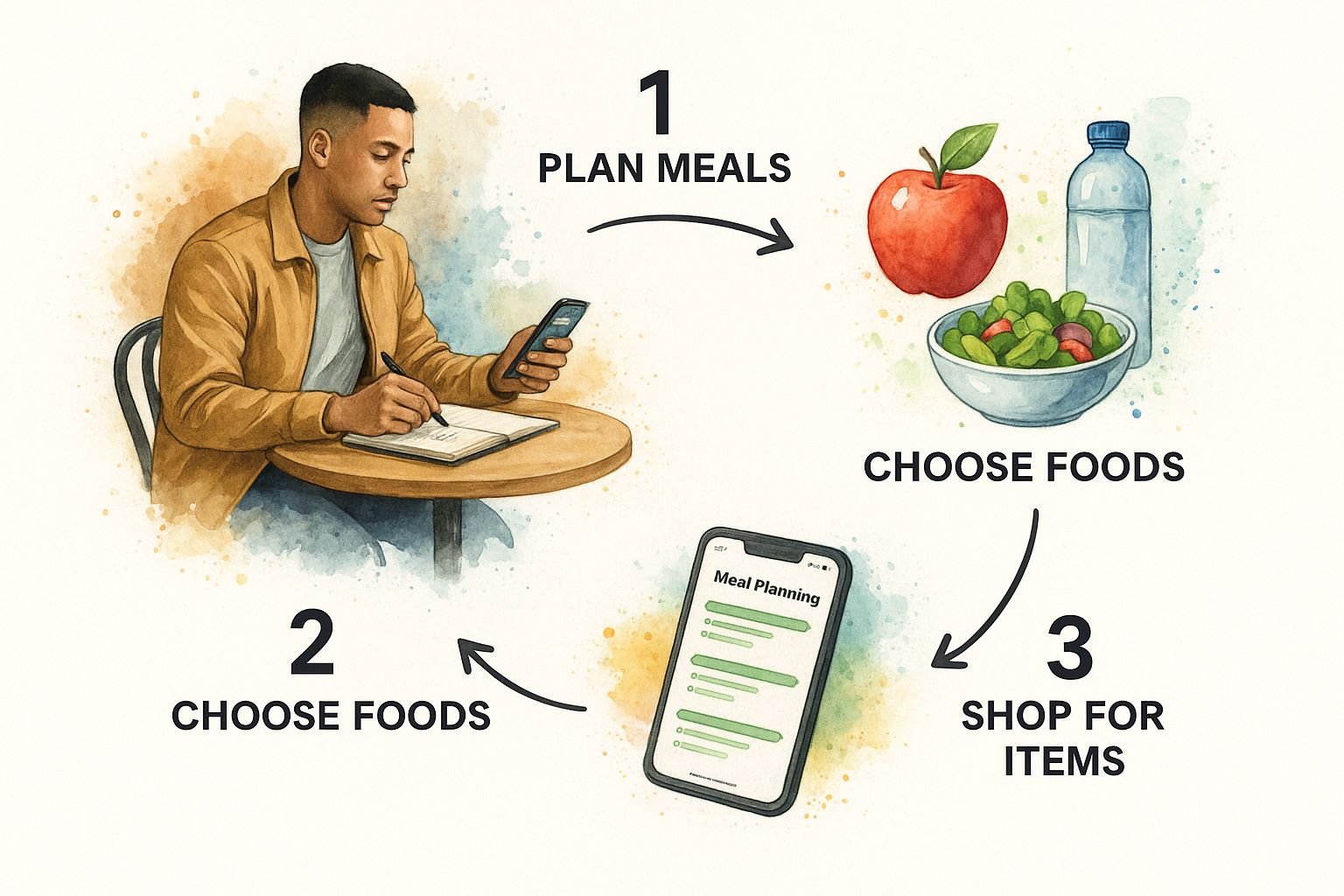
As you can see, just a few minutes of research before you go creates a simple, effective game plan for eating well.
Choose Your Accommodations Wisely
Where you sleep can make or break your healthy eating goals. Seriously. When you're booking your hotel or rental, try to find a place that has a kitchenette or, at the very least, a mini-fridge and a microwave. This one decision opens up so many options.
- You can store fresh snacks. Think yogurt, fruit, hummus, and pre-cut veggies.
- You can make simple breakfasts. A bowl of oatmeal, some hard-boiled eggs, or even a quick smoothie will start your day off right.
- You can save leftovers. That healthy restaurant meal can easily become lunch the next day.
I can't stress this enough: having even a small fridge gives you control over at least one meal a day. This single strategy can drastically cut down on how often you eat out, which is great for both your health and your wallet.
Packing the Ultimate Healthy Travel Toolkit
Your carry-on isn't just for a book and headphones—it's your secret weapon against unhealthy travel food. Packing smart is the single best way to sidestep the overpriced, sad-looking airport snacks and gas station junk food that always seem to sabotage our best intentions. When you've got a well-stocked toolkit, you're always ready when hunger decides to show up unannounced.
The idea isn't to haul your entire kitchen with you. It's about building a lightweight, portable system that keeps you feeling good. By focusing on nutrient-dense essentials that don't need a fridge, you'll stay fueled and energized without adding a ton of weight to your bag. For more general tips, our guide on how to pack efficiently has some great space-saving tricks that work perfectly here, too.
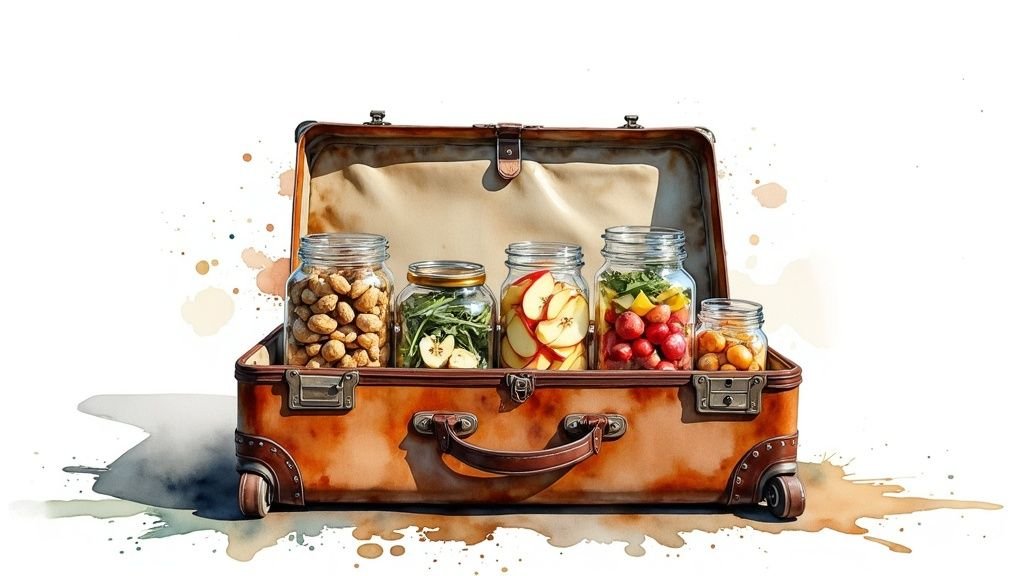
Stock Your Portable Pantry
Think of this as your "break-in-case-of-hunger" kit. Having a small stash of reliable snacks on hand means you’ll never again be at the mercy of a vending machine or a food court with nothing but greasy options. These items are generally TSA-friendly and can be a real lifesaver during a long layover or when you check into your hotel late at night.
My personal rule is to always pack at least two "emergency" snacks—something I can eat if my flight is delayed and all the shops are closed. It's a simple habit that has saved me from making poor food choices out of pure desperation more times than I can count.
A few powerhouse options I always consider:
- Protein Power: Single-serving protein powder packets are easy to mix with water, while beef jerky and roasted chickpeas offer a satisfying, savory crunch that keeps you full.
- Healthy Fats and Fiber: I like to pre-portion raw almonds, walnuts, or a good trail mix into small bags. They provide that slow-burn energy you need for long travel days.
- Quick Energy: Low-sugar granola bars, whole-grain crackers, and instant oatmeal cups (just ask for hot water) are perfect for a quick pick-me-up.
To make this even easier, I've put together a quick-glance table of what I call the "Essential Healthy Travel Snack Pack." It’s a great starting point for building your own kit.
Your Essential Healthy Travel Snack Pack
| Snack Category | Examples | Why It's Great for Travel |
|---|---|---|
| Protein | Protein powder packets, beef/turkey jerky, roasted chickpeas, nuts | Keeps you full, staves off hunger cravings, and stabilizes energy levels. |
| Healthy Fats | Almonds, walnuts, sunflower seeds, single-serve nut butter packets | Provides long-lasting, sustained energy to power through long flights or drives. |
| Complex Carbs | Whole-grain crackers, instant oatmeal cups, low-sugar granola bars | Offers a quick but stable energy boost without the sugar crash. |
| Dried Fruit | Raisins, dried apricots, apple chips | A great way to satisfy a sweet tooth with natural sugars and fiber. |
Packing a few items from each category ensures you have a balanced mix of nutrients to handle whatever your travel day throws at you.
Gear Up for Success
It's not just about the food. A few simple pieces of gear can completely change the game, turning your hotel room into a mini meal-prep station. These items are small, reusable, and incredibly useful.
Here's the simple but effective gear I never travel without:
- A Reusable Water Bottle: This is absolutely non-negotiable. Staying hydrated is so important for managing hunger and keeping your energy up. Just fill it up after you get through airport security.
- Portable Cutlery: A simple spork or a bamboo cutlery set means you can comfortably eat a salad, yogurt, or anything else on the go without flimsy plastic.
- Collapsible Containers: These are a traveler's best friend. Use them to portion out snacks from a larger bag or to save leftovers from a restaurant meal. It saves money and cuts down on food waste.
With just these few tools, you become completely self-sufficient. For instance, you can easily throw together a no-cook lunch by combining a pouch of tuna, a single-serve avocado cup, and some whole-grain crackers. Your toolkit empowers you to stay in control of your meals, no matter where you are.
Navigating Airports and In-Flight Food
Let's be honest, air travel can feel like a gauntlet of unhealthy food choices. You've got the chaotic food court on one side and a tiny bag of pretzels on the other. But with a little bit of planning, you can navigate it all without derailing your health goals.
The trick is to have a game plan before hunger takes over and you find yourself in a long line for greasy pizza. Take a quick walk around the terminal when you first arrive. You’d be surprised how many airports now have spots with fresh salads, grain bowls, or grilled chicken hidden among the usual fast-food chains.
Even the little newsstands and convenience shops are stepping up their game. I can almost always find things like Greek yogurt, hard-boiled eggs, fresh fruit, or bags of almonds. These are perfect for keeping your energy steady and avoiding that sluggish travel feeling.
Be Your Own Caterer
Here's the single best piece of advice I can give you: bring your own food. This is my non-negotiable strategy for any flight. Packing a few snacks or a full meal means you are completely in control.
It also does wonders for your peace of mind. Airports can be stressful, and knowing you have food you actually want to eat is one less thing to worry about. If you find travel days especially overwhelming, being prepared can make a huge difference. For more tips, our guide on how to overcome travel anxiety has some great strategies.
A few TSA-friendly ideas that I rely on:
- A simple sandwich or wrap on whole-grain bread
- A small container of quinoa salad with chickpeas and veggies
- Apple slices with those single-serving peanut butter packets
- A quality protein bar that’s low in added sugar
Hydration Is Non-Negotiable
That dry, recycled air on a plane is incredibly dehydrating. It can leave you feeling tired, headachy, and can even trick your body into thinking it’s hungry when it's just thirsty.
Make hydration your number one job. I never travel without an empty reusable water bottle. I take it through security and fill it up at a fountain on the other side. Then I make a point to sip it throughout the entire flight.
When the drink cart comes around, politely skip the sugary sodas and juices. Just stick to water. If you want a little something different, unsweetened seltzer or herbal tea are also great options to stay properly hydrated from gate to gate.
Decoding Airline Food
The good news? Airline food is slowly getting better. Catering companies serve millions of meals every year and are finally starting to focus more on traveler wellness. We're seeing more plant-based meals and less salt and unhealthy fats. To see where the industry is headed, you can find some fascinating insights about the future of healthy food onboard.
If you’re on a long flight where a meal is included, a little recon pays off. Hop on the airline’s website a week or so before you fly. Most carriers let you pre-order special meals like vegetarian, low-sodium, or gluten-free options. These are almost always a healthier choice than whatever the standard offering is.
Didn't get a chance to pre-order? No problem. Just make the smartest choice available. That usually means picking the grilled chicken over the creamy pasta and asking for extra salad if you can.
Making Smart Choices at Restaurants and Cafes

Let's be honest, dining out is one of the best parts of traveling. It's a chance to dive fork-first into the local culture. The great news? You don't have to sacrifice your health to enjoy incredible food. A few smart strategies can help you navigate any menu like a seasoned pro, so you can savor every bite without a second thought.
The real trick is learning how to read a menu like a detective, scanning for clues that point to healthier preparation. It’s a simple skill, but it’s the key to filtering your options before decision fatigue sets in. Master this, and you’ve cracked the code on how to eat healthy on the road.
Decode the Menu
Before you even think about what sounds good, train your eyes to spot specific cooking terms. These words are your best indicator of how a dish is actually prepared, helping you sidestep those hidden calories from heavy oils and sauces.
Keep an eye out for dishes described with these words:
- Grilled: Cooked over direct heat, requiring very little oil.
- Steamed: A fantastic oil-free method that’s perfect for locking in the flavor of veggies and fish.
- Baked or Roasted: Uses dry heat to cook, which naturally enhances the food's flavor.
- Poached: Gently simmered in liquid, keeping proteins lean and incredibly tender.
Conversely, be a little wary of terms like "fried," "crispy," "creamy," "battered," or "sautéed." It doesn't mean these are completely off-limits, but knowing what they imply helps you make a conscious choice.
Take Control of Your Order
Never feel shy about asking for what you want. Most kitchens are more than willing to accommodate small requests, and those little changes can make a massive difference to your meal's nutritional value.
A few easy tweaks can turn a heavy dish into a perfectly balanced one. Not only does this keep your health goals on track, but it can also be a smart financial move. For more on that, our guide on how to save money while traveling offers some great tips that pair well with eating mindfully.
Pro Tip: My go-to move is asking for all sauces, dressings, and gravies on the side. This one simple request puts you in the driver's seat, letting you decide how much to add—a choice that can easily save you hundreds of calories.
Here are a few other simple swaps to try:
- Ask to swap fries for a side salad, steamed veggies, or even some fresh fruit.
- Request that your fish or chicken be grilled or baked instead of fried.
- Check if they offer whole-grain options for bread, pasta, or rice.
Practice Mindful Portioning
It’s no secret that restaurant portions have gotten huge over the years. They often serve far more food than one person really needs in a single meal. Paying attention to portion size is your best defense against feeling sluggish and overstuffed later.
Here's a strategy I use all the time: decide on your portion before you take your first bite. When your plate arrives, visually cut it in half. Eat one half now and ask for the other half to be boxed up for later. Just like that, you’ve got two meals instead of one—a win for your body and your budget.
You can also be strategic right from the start. Think about sharing a large entrée with your travel companion and adding an extra side salad for each of you. Another great option is to build a meal out of two or three healthy appetizers instead of a massive main course. It's a fantastic way to sample more flavors without overdoing it.
Hitting Up Local Markets and Grocery Stores
Here’s one of the best-kept secrets for eating well on the road: make the local grocery store your first stop. Seriously. Swapping out a few restaurant meals for a trip to a nearby market or grocer gives you total control over what you're eating and, as a bonus, a real window into local life.
There's something special about wandering the same aisles as the locals. You’ll find the freshest produce, interesting regional cheeses, and all sorts of unique snacks that you'd completely miss in a restaurant geared toward tourists. It's a simple strategy that saves you money and connects you to the local culture in a way a fancy dinner never could.
This hands-on approach often goes hand-in-hand with an active travel style. It's interesting—a recent study found that people who get around by walking or cycling on their trips tend to have healthier diets than those who stick to cars. It seems that when you're more engaged with your surroundings, you naturally make better choices all around. You can check out the full UK Biobank study here.
Your Grocery Store Game Plan
Strolling into a grocery store in a new place can be a little disorienting at first, but all you need is a simple game plan. The goal is to grab versatile, easy-to-use ingredients that you can whip into simple, healthy meals without a kitchen.
Think of it as a scavenger hunt for good food. Here’s what to look for:
- The Produce Section: Start here. Grab easy-to-eat fruits like apples and bananas. Pre-washed salad greens, cherry tomatoes, and baby carrots are your best friends.
- The Deli Counter: This place is a treasure trove of lean protein. Sliced turkey, a rotisserie chicken, or pre-cooked hard-boiled eggs are all fantastic options.
- The Dairy Aisle: Single-serving Greek yogurts or cottage cheese containers make for a perfect, protein-heavy breakfast or a quick snack.
- The Pantry Aisles: Stock up on whole-grain crackers, instant oatmeal packets, nuts, and those handy single-serving pouches of tuna or salmon.
I have a personal rule I stick to on every trip: I always buy enough for at least one breakfast and one lunch. It’s a small thing, but it ensures I start my day strong and have a solid midday meal ready to go. That way, I can enjoy a guilt-free dinner out wherever I want.
No-Fuss Hotel Room Meal Ideas
Even if all you have is a mini-fridge, you can still pull together some surprisingly good meals. The trick is to think about combining simple ingredients, not following complicated recipes. This is where your grocery run pays off, keeping you on track and feeling great.
Here are a few of my go-to hotel room creations:
- The 2-Minute Salad: Toss those pre-washed greens with cherry tomatoes, cucumber, and a protein source like shredded rotisserie chicken or a can of chickpeas.
- The Ultimate Yogurt Bowl: Take a Greek yogurt and top it with some fresh local fruit and a handful of nuts. It's a breakfast that feels indulgent but is packed with goodness.
- The "Makeshift" Charcuterie: Lay out some sliced turkey, a bit of cheese, whole-grain crackers, and some fresh veggies on a plate. It’s a perfect light dinner that requires zero cooking.
By making local stores part of your travel routine, you’re doing more than just feeding yourself well—you’re getting a genuine taste of your destination.
Your Healthy Travel Questions Answered
Even the most seasoned traveler knows that a great plan can go sideways in a hurry. A delayed flight, a hotel room without a kitchen, or a sudden craving for a local specialty can throw your healthy eating goals for a loop.
So, let's talk through some of those common "what do I do now?" moments. Getting a handle on these tricky situations is what separates a frustrating trip from a successful one.
How Can I Stay Hydrated While Traveling?
This is one of the biggest—and most overlooked—keys to feeling good on the road. Dehydration is sneaky. It can drain your energy and even make you think you’re hungry when all you really need is water.
Your best friend here is a reusable water bottle. Seriously, take it everywhere. Once you're through airport security, fill it up. Make it a game to see how many times you can drain and refill it during the day.
If you're in a hot climate or tackling a tough hike, toss an electrolyte tablet or powder into your water. It’s a great way to replace the essential minerals you lose through sweat. It's easy to reach for a soda, but sticking to water, herbal tea, or seltzer will keep you truly hydrated and help you sidestep that dreaded sugar crash.
What Are the Best Hotel Room Meals with No Kitchen?
No kitchen? No problem. A mini-fridge and a dash of creativity can save you from another night of greasy takeout. You can actually pull together some really satisfying meals right in your room.
Here are a few of my go-to, no-cook ideas:
- Instant Oatmeal: Nearly every hotel room has a coffee maker. Just run hot water through it for a perfect, filling breakfast.
- Rotisserie Chicken Salad: Pop into a local grocery store for a pre-cooked rotisserie chicken and a bag of salad greens. You've got an instant, protein-heavy meal.
- Yogurt Parfaits: Layer some Greek yogurt with fresh berries and a handful of granola. It works for breakfast, a light lunch, or a snack.
- Tuna or Salmon Pouches: These are lifesavers. Pair one with whole-grain crackers and a single-serving pack of guacamole for a fast, nutrient-packed lunch.
How Do I Handle Dietary Restrictions When Traveling?
Traveling with a food allergy or a restriction like gluten intolerance just means you need to do a little homework. It's completely doable, I promise. Your best defense is a good offense.
Before you even pack your bags, use apps like FindMeGlutenFree or HappyCow to find restaurants that can accommodate you. It’s also incredibly helpful to learn a few key phrases in the local language, like "I cannot eat…" or "Does this contain…?"
When you're dining out, be clear and polite with your server about your needs. And always, always have a few trusted snacks in your bag as a backup. Think of this prep work as its own form of insurance—just like understanding what is travel insurance coverage protects you from other unexpected travel snags.
Being your own advocate is everything. Never feel shy about asking questions about ingredients or how a dish is prepared. Your health is worth that extra minute of conversation.
Is It Okay to Indulge on Vacation?
One hundred percent, yes! Food is a massive part of experiencing a new culture. Trying that famous gelato in Italy or the buttery croissants in Paris is the adventure.
A healthy travel mindset is about balance, not perfection. I live by the 80/20 rule on the road. Try to make thoughtful, nourishing choices for about 80% of your meals. Then, for that other 20%, give yourself permission to dive headfirst into those special, can't-miss-it local treats without an ounce of guilt. It's the best way to savor your destination's flavors while still feeling fantastic.
Ready to make your next trip the easiest one you've ever planned? Let The People Travels create a personalized itinerary just for you, complete with dining recommendations that fit your style. Get started here