Let's be honest: the secret to a great group trip isn't just about picking an amazing destination. It's about getting the boring stuff right before anyone even opens a travel website. This first part of the planning process is where you lay the groundwork for a smooth, drama-free adventure. Nail this, and you’re setting everyone up for success.
Laying the Groundwork for a Seamless Group Trip

Before you get lost in visions of beachfront villas or bustling city streets, you have to get organized. I’ve seen it a hundred times—the difference between a trip that flows beautifully and one that’s a chaotic mess of arguments comes down to these first crucial steps.
This early stage is all about managing expectations and making sure every person feels heard. It’s less about hard logistics and more about creating a team spirit. When people feel included from the get-go, they’re far more invested in making the trip awesome for everyone.
Appoint a Trip Leader (or a Small Committee)
Every successful group trip needs a point person. This isn't about one person calling all the shots; it’s about having a designated leader (or a small, decisive committee of two or three) to keep the ball rolling. This person becomes the central organizer—the one who gathers info, presents options, and nudges the group toward a final decision.
Without a leader, you’ll inevitably fall into "analysis paralysis," where a dozen great ideas get thrown around but nothing ever gets booked. The leader's real job is to filter the group's wishes into a concrete, actionable plan.
The trip leader isn't a dictator; they're a facilitator. Think of them as the conductor of an orchestra, making sure everyone plays their part without causing a racket. This simple structure avoids the classic "too many cooks in the kitchen" problem.
Set Up a Central Communication Hub
This is non-negotiable. Forget trying to plan a trip over scattered email threads, rogue text messages, and DMs. The very first thing your group should do is create a single, dedicated space for all trip-related conversations.
A central hub guarantees everyone gets the same information at the same time, which cuts down on misunderstandings and "I never saw that!" excuses. This will be your command center for polls, flight updates, and last-minute questions.
- WhatsApp or Telegram Group: My personal go-to for real-time chats, sharing links, and running quick polls. Almost everyone has one of these apps, so setup is a breeze.
- Facebook Group: A great option for longer-form updates, organizing photos after the trip, and using the "Files" section to store important documents like ticket confirmations.
- Shared Google Doc: The perfect sidekick to your chat group. Use it to outline potential itineraries, track who has paid for what, and keep a running list of everyone's contact info and flight details.
Organizing this way has become critical. In the first quarter of 2025 alone, group travel bookings jumped by a whopping 21% compared to the previous year, and with 72% of all travel now booked online, a digital hub is no longer a nice-to-have. It’s a must.
Before you dive deeper, here's a quick checklist to make sure you've got the essentials covered. Think of this as your foundation.
Your Initial Group Planning Checklist
| Action Item | Why It Matters | Recommended Tool |
|---|---|---|
| Appoint a Leader | Prevents decision-making gridlock and ensures someone is driving the process forward. | N/A – A simple group vote! |
| Create a Chat Group | Centralizes all communication, reducing missed messages and confusion. | WhatsApp or Telegram |
| Set Up a Shared Doc | Creates a single source of truth for important details like budgets, flights, and contact info. | Google Docs |
| Define the "Why" | Aligns everyone's expectations on the trip's purpose (e.g., relax vs. adventure). | A poll in your chat group |
Getting these four things done first will save you countless headaches down the road.
Define the Trip's Core Purpose and Vibe
Okay, before you even whisper the word "destination," you have to agree on the "why." A mismatch in expectations is the number one trip-killer. Is this a chill, do-nothing beach vacation, or are we talking about a fast-paced city break packed with museums and tours from dawn till dusk?
Use your shiny new communication hub to ask the big-picture questions right away:
- What’s the main goal here? Is it a celebration? Total relaxation? A wild adventure? Cultural immersion?
- What's the pace? Are we go-go-go, or are we leaving plenty of room for spontaneous discoveries?
- What are everyone's non-negotiables? This is where you find out someone must have a private bathroom or another person needs at least one full day with zero plans.
Figuring this out first helps you narrow down potential destinations organically. A group that wants to party all night probably shouldn't be looking at a quiet wellness retreat in the mountains. For those planning a bigger journey, our guide on how to plan international travel dives deeper into syncing up these kinds of preferences. When you get this alignment right, the destination you choose will feel like the perfect fit for the entire group.
Choosing a Destination and Setting the Budget
Okay, you've all agreed on the vibe of the trip. Now comes the hard part—or at least, the part where most group trips fall apart: deciding where to go and how much everyone's willing to spend.
This is where a little leadership goes a long way. The absolute worst thing you can do is ask the dreaded, wide-open question: "So, where does everyone want to go?" It’s a recipe for chaos. Instead, the trip leader needs to steer the ship with a few solid, pre-vetted options.
Offer Curated Choices, Not a Blank Slate
The secret to getting a group to agree on a destination is to narrow the field for them. Do some initial research based on the trip's purpose and present two or three fantastic, but distinct, options.
Let's say the group wants a "relaxing beach getaway with good food." Don't just leave it at that. Come back with something concrete.
For example, you could say: "I looked into our beach trip idea for May and found three cool spots. We could do a quiet all-inclusive in Tulum, Mexico; a charming Airbnb near the coast in Albufeira, Portugal; or a few beachfront bungalows in Costa Rica. They each have a slightly different feel and price."
See the difference? You've transformed an overwhelming brainstorming session into a simple choice. It shows you've listened, done the homework, and are ready to move forward.
Get on the Same Page with a Shared Budget
Money talk is awkward, but it’s non-negotiable for a successful group trip. You have to tackle it head-on with total transparency. The easiest way I’ve found to do this is with a simple shared document that everyone can access.
A basic Google Sheet is your best friend here. It doesn’t need to be fancy. Just create a spreadsheet with columns for the major expense categories. Seeing the costs broken down makes the total number feel less intimidating and helps everyone understand where their money is going.
Your budget should absolutely include:
- Lodging: The cost per person for the hotel or rental.
- Flights/Transportation: A realistic estimate for flights or ground travel.
- Planned Activities: Any tours, tickets, or excursions you plan to book in advance.
- Group Meals: A rough budget for dinners you plan to eat together.
- Contingency Fund: Always add a 10-15% buffer for unexpected expenses. Trust me on this.
Being upfront about costs builds trust and prevents nasty surprises later. Plus, knowing how to save money while traveling will help the group make smart choices on everything else.
A shared budget isn’t just about the numbers. It’s a trust-building tool. When everyone sees the costs laid out, it eliminates the guesswork and prevents those uncomfortable money conversations down the road.
Lock Down a Payment System and Deadlines
Once the budget is set, you need a plan for collecting the cash. Chasing people down with individual Venmo requests is a nightmare waiting to happen. You need one, centralized system.
Decide from the get-go how it will work. Will one person put everything on their card and get reimbursed? Or will you use an app like Splitwise to track who-owes-who as you go? For big, upfront costs like flights and lodging, it’s usually best for everyone to send their share to the designated planner by a set date.
And speaking of dates, set firm—but friendly—deadlines. Tie them to actual booking dates to create a natural sense of urgency. For instance: "Hey everyone, the deposit for our rental is due on the 15th, so I'll need your share by the 14th to make sure we lock it in!" This keeps things moving without making you feel like a debt collector.
Crafting an Itinerary That Actually Works for Everyone

This is the moment of truth. A rigid, over-packed schedule is the fastest way to suck the fun out of a trip. The secret to a great group itinerary isn’t about scheduling every single minute; it's about creating a flexible framework that gives the trip some shape without making everyone feel suffocated.
Think of yourself as the trip's architect, not its drill sergeant. Your job is to design a schedule that flows, leaving room for both the early birds and those who need a slow, leisurely morning. The best trips I've planned always mix a few key group moments with generous pockets of free time for people to wander, explore, or just relax.
Find Your "Anchor" Events
Before you even open a calendar, you need to figure out what everyone is actually excited about. The easiest way to do this is with a quick poll in your group chat. Don't ask for a laundry list of ideas—that gets overwhelming fast. Instead, ask each person for their top one or two 'must-do' experiences.
Once you have those answers, you'll see a few clear winners emerge. These become your 'anchor' events—the non-negotiable highlights that you’ll build each day around.
Let's say you're in Rome. A pre-booked 10 AM tour of the Colosseum could be your anchor for Tuesday. That one appointment gives the day a focus. With that locked in, the rest of the day is wide open. Someone might want to spend the afternoon getting lost in the Roman Forum next door, while another person would rather find a quiet café for a two-hour lunch. Both are possible because the schedule has breathing room.
The Art of a Balanced Schedule
A balanced schedule respects that everyone has different energy levels. Shoving three museums, a walking tour, and a fancy dinner into one day is a surefire recipe for burnout. A much better approach is to create a rhythm, alternating high-energy days with more relaxed ones.
For a week-long trip, the flow might look something like this:
- Day 1 (Arrival): A low-key anchor, like a casual welcome dinner near your hotel. The rest of the day is for settling in and shaking off the travel fatigue.
- Day 2 (Adventure): A high-energy anchor. This could be a big tour, a long hike, or a city-wide scavenger hunt.
- Day 3 (Relaxation): A low-energy anchor. Think a lazy afternoon at the beach or a leisurely cooking class, with plenty of downtime.
- Day 4 (Exploration): A medium-energy day. Maybe a group activity in the morning, with the entire afternoon left completely free for people to pursue their own interests.
This kind of pacing prevents exhaustion and gives everyone what they need—introverts get time to recharge, and extroverts still get plenty of group fun.
The perfect itinerary is a safety net, not a cage. It provides enough structure to ensure you hit the highlights but offers enough freedom for people to make the trip their own. Spontaneity can only happen when there’s room for it.
Weave in Modern Travel Tastes
As you pull the plan together, remember what people are looking for in 2025. Travelers are increasingly drawn to sustainable, nature-based, and eco-friendly experiences. These often make fantastic anchor activities that appeal to almost everyone in a group.
Building in time for a coastal cleanup, a visit to a local artisan's workshop, or a farm-to-table meal not only creates unique memories but also connects with what many people value today. For more ideas on this front, you can check out our detailed guide on how to plan a travel itinerary that feels fresh and modern.
Post a Central, Shared Itinerary
Once you have a solid draft, get it into a shared document where everyone can see it. Tools like Google Docs, TripIt, or Wanderlog are brilliant for this. A central, living document prevents endless questions and confusion.
Make sure your shared itinerary clearly shows:
- Daily Anchor Events: List the time, location, and any booking confirmation numbers.
- Optional Activities: Add a few suggestions for things to do nearby for anyone looking for ideas during their downtime.
- Free Time Blocks: Explicitly label periods as "Free Time" or "Your Choice." This empowers people to make their own plans without feeling like they're ditching the group.
By taking this approach, you're not just a tour guide dragging people from place to place. You're a facilitator, creating the perfect conditions for a genuinely shared and unforgettable experience.
Tackling Bookings and Group Finances
This is where the rubber meets the road. All those ideas buzzing in your group chat are about to become real, tangible reservations. Handling the logistics for a whole crew can feel like a high-stakes game of Tetris, but with a solid system, it's totally manageable. The key is to be organized and transparent about payments and confirmations right from the start.
Getting this part right prevents so much future stress. You want to avoid that last-minute panic of "Who has the confirmation number?" or the awkwardness of chasing people down for money. A little bit of structure here will make the actual trip way more harmonious. Trust me.
Who’s Hitting the “Book Now” Button?
One of the first big questions to answer is how everything gets booked. Should one person be the designated "booker," or does everyone handle their own big-ticket items like flights? There’s no single right answer—it really depends on your group’s dynamic.
Centralized Booking (One Person Does It All)
- Best For: Trips where you’re all sharing one big vacation rental or flying out of the same airport. This keeps all the bookings consistent and in one place.
- Potential Pitfalls: The designated planner shoulders a ton of responsibility (and financial risk). They need to be incredibly detail-oriented and comfortable fronting money or collecting it from everyone right away.
Individual Bookings (Everyone for Themselves)
- Best For: Groups where people are traveling from different cities or have strong preferences for certain airlines or flight times. It gives everyone control over their own schedule and budget.
- Potential Pitfalls: This requires more coordination to make sure everyone lands around the same time. There’s also the risk that someone waits too long to book and misses out on the same flight or train as the rest of the group.
Often, a hybrid approach is the sweet spot. For example, have one person book the shared Airbnb while everyone else is in charge of their own flights. This gives you the best of both worlds: centralized control for the shared stuff and individual flexibility for personal travel.
To help you figure out what makes the most sense for your trip, here’s a quick breakdown of the different ways you can handle group bookings.
Comparing Group Booking Methods
| Booking Method | Best For | Potential Pitfalls |
|---|---|---|
| Centralized Planner | Small groups, shared accommodations (like a single house), trips with a simple, fixed itinerary. | The planner takes on significant financial risk and a heavy organizational load. Delays in reimbursement can cause stress. |
| Individual Bookings | Groups traveling from different locations, travelers with varying budgets or preferences (e.g., airline loyalty). | Requires tight coordination to align arrival/departure times. Can be chaotic if someone is a procrastinator. |
| Hybrid Approach | Most group trips. Balances central coordination for shared items (lodging) with individual freedom for personal items (flights). | Clear communication is essential to define who is responsible for booking what. |
Ultimately, the goal is to pick the method that causes the least amount of friction for your specific group of people.
The Best Tools for Splitting Costs and Tracking Plans
Forget about confusing spreadsheets and the endless back-and-forth of Venmo requests. There are fantastic tools built specifically for the financial headaches of group travel that make tracking expenses and splitting costs a breeze. Using the right app keeps everything transparent and stops one person from feeling like the group’s unwilling accountant.
This infographic gives a great visual on how to balance your group's time and money during a typical travel day.
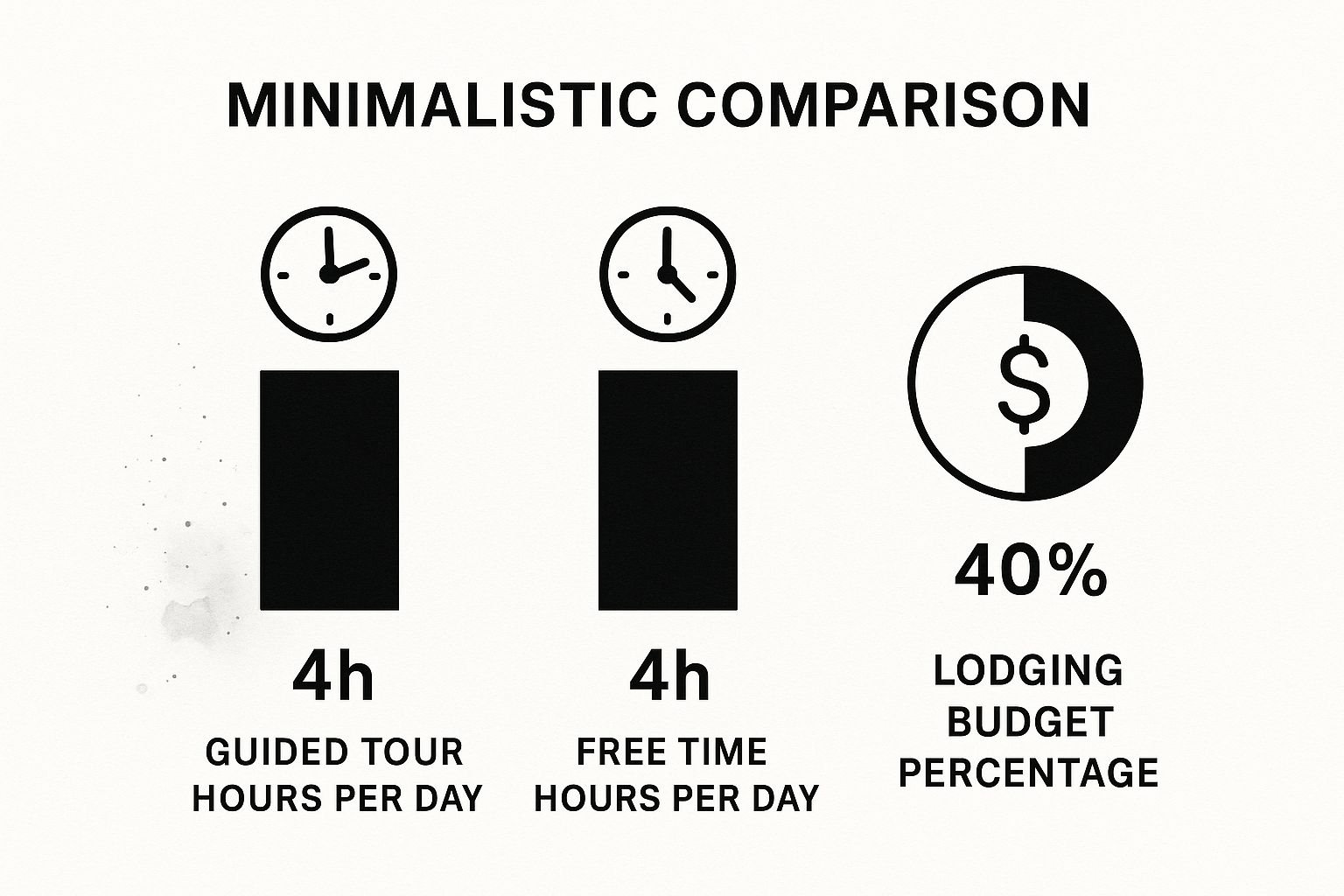
It’s a good reminder that dedicating a good chunk of your budget to lodging while splitting time between planned activities and free-roam exploration usually leads to the best experience.
When it comes to the money part, a dedicated app is non-negotiable.
I swear by expense-splitting apps like Splitwise. It creates a running, real-time tally of who paid for what and instantly calculates who owes whom. It completely eliminates all those awkward money conversations.
And for keeping all your confirmations and reservations in one spot, it's worth exploring some of the best travel planning apps out there that are designed to organize itineraries, documents, and important numbers.
Finding the Right Place for Your Crew to Stay
Where you stay can totally define the vibe of a group trip. Hotels are great, but separate rooms can sometimes feel a bit disconnected. Accommodations actually designed for groups help create a much more communal and memorable experience.
Here are a few options to think about:
- Vacation Rentals (Airbnb, Vrbo): This is often the best bang for your buck and the most social option. Having a shared living room and kitchen creates a natural home base for the group to hang out, make breakfast together, and recap the day.
- Connecting Hotel Rooms: If your group really wants the amenities of a hotel (daily housekeeping, a pool, a front desk), booking connecting rooms or a multi-room suite is a perfect compromise between privacy and togetherness.
- Boutique Hostels with Private Rooms: Don't sleep on modern hostels! Many now offer private rooms with multiple beds and an en-suite bathroom. It’s a great way to get a social atmosphere on a budget without sacrificing your group’s privacy.
No matter which option you land on, always, always read the cancellation policy before you book. Seriously. With more people in the mix, the odds of someone having to back out for an emergency go up. A flexible cancellation policy is a safety net for the whole group and protects everyone’s investment.
On-the-Ground Communication: Keeping the Good Vibes Going

Getting everyone to the destination is just half the battle. Now, the real work begins: navigating the group's energy on the ground. This is where a trip goes from good to unforgettable. Your role shifts from planner to conductor, keeping the momentum positive with clear and simple communication.
This part of the journey is all about smoothing out potential friction points before they even start. With a few smart moves, you can make sure everyone feels included, respected, and excited for whatever comes next.
The Daily Morning Huddle
One of the best habits to get into is a quick, informal huddle each morning. I'm not talking about a formal meeting—just a five-minute chat over coffee or a quick message in the group chat before everyone scatters.
This daily check-in is your chance to confirm the day's main event, remind everyone about pre-booked times, and make small adjustments on the fly. Did the forecast change? Does someone need a slower morning? A quick chat lets you pivot as a team instead of letting a minor hiccup derail the whole day.
Your group chat is your command center on the ground. It's for more than just logistics. Use it for real-time updates, sharing live locations when you split up, or dropping a pin for the exact dinner spot.
A simple message like, "Morning team! Friendly reminder our walking tour is at 10 AM. Let's meet in the lobby at 9:45?" takes all the guesswork out of the morning and gets everyone aligned.
Sidestepping Common Roadblocks with Finesse
Even in the most harmonious groups, some decisions can bring everything to a grinding halt. The most notorious offender? Deciding where to eat. "So, what does everyone want for dinner?" is a question that can easily spark a 45-minute debate when everyone is already hungry.
Instead, I always use the "limited choice" technique. The trip leader, or anyone willing to step up, should find two or three solid, well-reviewed options and present them to the group.
- "Hey everyone, for dinner tonight I found a great pizza place and a cool taco spot just a few blocks away. Anyone have a strong preference?"
This simple trick gives everyone a voice without the paralysis of infinite choice. It respects different tastes while keeping the decision-making fast and painless. You can use the same tactic for figuring out afternoon activities or where to grab drinks.
This kind of group coordination is becoming more and more common, especially with the rise of "bleisure" travel—that mix of business and leisure. Group planning for company retreats and events is a huge part of the business travel sector, which is projected to hit $1.64 trillion in global spending by 2025. As this grows, so does the need for smooth on-trip management. You can learn more about the trends shaping modern business travel on Engine.com.
Embrace Flexibility and Personal Time
Remember that wonderfully flexible itinerary you built? Now’s the time to put it to use. It’s almost guaranteed that someone will wake up not feeling a planned activity, or a few people will want to linger at a cool shop they discovered. Let them.
Actively encourage people to use the downtime you scheduled. Reassure the group that it's totally okay to split up for a couple of hours. This empowers everyone to shape the trip to their own energy levels and interests, which is the secret to avoiding group burnout.
Here’s how to handle it gracefully:
- Set a Clear Rally Point: If people are heading off on their own, establish a firm time and place to meet back up. For instance, "Okay, have fun! Let's all meet back at the hotel lobby at 6 PM to head out for dinner."
- Share Live Locations: For extra peace of mind, have people temporarily share their location in the group chat. It makes regrouping later incredibly easy.
By fostering an environment where group activities and solo time are both valued, you make sure everyone comes home feeling like they got the vacation they needed.
Common Questions About Planning Group Travel
Even with the most airtight plan, you’re bound to hit a few snags. This is where we tackle those all-too-common questions that pop up when you're trying to herd cats—I mean, organize a group trip. Think of this as your go-to guide for squashing problems quickly so you can get back to the fun stuff.
What Are the Best Apps for Group Travel Planning?
Having the right tech in your pocket can be a total game-changer. For actually building out the day-to-day schedule, you can't go wrong with collaborative itinerary apps.
-
For Itineraries: Tools like Wanderlog or TripIt are brilliant. Everyone can toss in their ideas, see the final plan, and pull up confirmation details without having to dig through their inbox.
-
For Money: When it comes to managing the budget, Splitwise is the undisputed king. It tracks every shared expense—from a round of drinks to the rental car—and tells you exactly who owes who what. It single-handedly prevents those awkward money conversations.
-
For Communication: Don't overthink it. A simple group chat in WhatsApp or Telegram is still the most reliable way to send real-time updates, run quick polls ("Pizza or tacos for dinner?"), and share photos on the go.
How Do You Handle Someone Who Doesn't Pay on Time?
Honestly, the best way to deal with this is to prevent it from happening in the first place.
Start by setting crystal-clear payment deadlines right from the get-go. Using an app like Splitwise makes it all feel less personal and more like a simple, transparent part of the process.
If someone does miss a deadline, pull them aside for a private, friendly chat. The key is to frame it as a logistical thing, not a personal failing.
A quick message like, "Hey, just a reminder the final payment for our Airbnb is due this Friday so we don't lose the booking!" is direct but still polite. It focuses on the shared goal and avoids letting resentment bubble up.
What's the Best Way to Make Group Decisions Quickly?
The absolute fastest way to bring a group to a standstill is to ask open-ended questions like, "So, what does everyone want to do for dinner?" It’s a recipe for decision paralysis.
The trick is to narrow the field. Do a little research yourself and then present just two or three solid options.
I call it the "limited choice" method, and it works like a charm. Instead of an open forum, try: "Okay, I found a great pizza place and a highly-rated taco spot a few blocks away. Any strong preferences?" This gives people a real say without sparking a 30-minute debate when everyone is already hungry.
Is Group Travel Insurance Really Necessary?
Yes. Full stop. It's not just a good idea; it's essential.
For groups, it’s even more critical because one person’s canceled flight or medical emergency can completely torpedo the trip for everyone, often with serious financial consequences. A solid group policy will cover things like trip cancellations, medical issues, and lost luggage for every single person in your party.
Life is unpredictable, and when you’re coordinating that many moving parts, you have to plan for it. Take some time to understand what travel insurance coverage actually includes. It's a non-negotiable safety net. If you can, springing for a "cancel for any reason" add-on can provide incredible peace of mind.
Ready to take the guesswork out of your next trip? At The People Travels, we use smart technology to build personalized itineraries that match your group's unique vibe and budget. Stop drowning in tabs and start exploring with a plan made just for you.
Create your perfect itinerary with The People Travels today!