The secret to a truly memorable trip? It’s not about finding the perfect destination right away. It's about figuring out what you want from the experience before you even open a single travel blog.
So, let's take a step back from the "where" and start with the "why" and "how."
Defining Your Trip Before You Plan Anything
Before you get lost in a sea of flight deals and hotel reviews, take a moment for some crucial self-reflection. The best itineraries are built on a solid foundation of clear goals. Without this, you might end up with a plan that looks great on paper but feels all wrong when you’re actually there.
Think about it: a solo traveler looking for quiet introspection has completely different needs than a family with young kids hunting for adventure. Your unique travel style is the compass that guides every decision, from the pace you set to the activities you choose.
This is especially true if you're traveling alone, where your interests are the only ones you need to satisfy. If you're going solo, our guide on how to plan a solo trip has some great advice specifically for crafting that perfect independent journey.
Identify Your Travel Priorities
Now, let's dig a little deeper into your personal travel vibe. Are you the kind of person who wants to hit three cities in five days, ticking off every landmark? Or would you rather sink into one neighborhood and live like a local for a week?
A few things to consider:
- Pace: Do you thrive on a packed schedule, or do you need plenty of unscheduled downtime to relax by a pool or read in a café? Be honest with yourself.
- Experience: What are you really after? Is it a culinary quest, a deep dive into history, an adrenaline-pumping outdoor adventure, or a tour of the best nightlife?
- Comfort Level: Are you a budget backpacker who loves the social scene of a hostel, or do you need the quiet comfort and amenities of a boutique hotel to recharge?
Getting clear answers to these questions is a game-changer. It helps you immediately filter out destinations and activities that just aren't a good fit, saving you from hours of wasted research.
To help you pinpoint your travel personality, I've put together a simple framework. Think of it as a cheat sheet to guide your initial planning.
Travel Style Planning Framework
| Planning Aspect | Adventurer | Relaxer | Cultural Explorer |
|---|---|---|---|
| Pace | Fast-paced, action-packed | Slow, unscheduled, flexible | Moderate, with time for immersion |
| Activities | Hiking, kayaking, zip-lining | Beach lounging, spa days, reading | Museums, historical sites, local classes |
| Accommodation | Eco-lodges, campsites, unique stays | All-inclusive resorts, villas, spas | Boutique hotels, local guesthouses |
| Destination | Costa Rica, New Zealand, Patagonia | The Maldives, Bali, Greek Islands | Rome, Kyoto, Mexico City |
Using a simple guide like this helps you translate your desires into a concrete plan, ensuring the itinerary you build truly reflects the trip you want.
Set a Realistic Budget and Timeline
Alright, let's talk about the practical stuff: money and time. Your budget and trip duration are the guardrails for your entire plan.
Financial planning has become a huge part of travel. Recent data shows the average American's travel budget has climbed to $10,244, and a whopping 79% are actively setting a budget for their trips. This isn't just a number; it tells us people are getting serious about planning their travel spending. You can dig into the details in the full American travel report.
Your budget isn’t a restriction—it’s a guide. Knowing your financial limits empowers you to make smart choices, like picking a more affordable destination or deciding which big-ticket activities are your absolute must-dos. A clear budget gives you the freedom to plan with confidence, not with the stress of potential overspending.
How to Research Your Trip with Modern Tools
Once you've nailed down your travel style and budget, it's time for the fun part: the research. Forget flipping through dusty guidebooks. Modern trip planning is all about blending powerful digital tools with authentic human experiences to craft a plan that’s both smart and reliable. The goal here is to gather a ton of ideas and then filter them through real-world advice.
Technology has completely changed the game. Nowadays, 72% of travelers book their trips online. Experts even predict that by 2029, online sales will make up 75% of all tourism revenue. Artificial intelligence is a massive driver of this shift, with 22% of global travelers already using AI chatbots to get started. You can find more of these online travel booking statistics to see just how much has changed. Bottom line: the tools available to you are more powerful than ever.
Brainstorming with AI and Validating with People
I always recommend starting your research with a broad-strokes approach using an AI trip planner. These tools are fantastic for generating a lot of ideas, fast. For instance, you could prompt it with something like, "Give me a 5-day itinerary for Lisbon for a foodie who loves history but hates big crowds." In seconds, you'll have a structured starting point.
But an AI-generated list is just that—a start. The most critical step is to take those suggestions and validate them with real human experience. This is where you dig into more personal sources to get the full story. If you're looking for the right tool, check out our guide on the best AI travel planner tools to find one that suits you.
After you have that initial list, it's time to dive into these more authentic resources:
- Travel Blogs: I always search for recent posts from bloggers who seem to have a similar travel vibe. Their detailed stories are often packed with logistical tips and hidden gems you won't find anywhere else.
- YouTube Vlogs: Watching a travel vlog gives you a genuine feel for a place. It's the best way to judge the atmosphere of a neighborhood or see how big an attraction really is.
- Forums like Reddit: Communities like r/solotravel or city-specific subreddits are goldmines for unfiltered opinions and up-to-the-minute advice from a huge mix of travelers.
The magic formula is AI for speed, humans for soul. Let technology cast a wide net for ideas, then turn to real travelers' stories to find the nuance, context, and honest feedback that makes a trip truly memorable.
Organizing Your Findings Dynamically
As you start gathering all this great information, ditch the static Word document. You need a dynamic research hub. I personally love using tools like Notion or creating a custom Google My Maps for this.
For example, you can use Google Travel's "Things to do" feature to quickly find popular spots, see where they are on a map, and scan recent reviews.
Here’s a quick look at how Google Travel lays everything out, which really helps you visualize your options.

This map-based view is invaluable because you can instantly see which activities are clustered together, making it so much easier to plan efficient daily routes.
By dropping pins on a custom map for every restaurant, museum, and viewpoint that catches your eye, you're essentially building a visual library of possibilities. This approach makes grouping activities by neighborhood a breeze later on, saving you precious time and energy when you’re actually there. It’s how you turn a messy list of ideas into a clean, workable blueprint for your trip.
Building Your Daily Itinerary Blueprint
Alright, you've done the research and have a fantastic collection of ideas. Now for the fun part: weaving those ideas into a daily plan that actually works. This is where you move from a list of "maybes" to a real itinerary that feels exciting, not exhausting. The secret is to think logically about your days to cut down on travel time and really soak in the experience, instead of just frantically racing from one end of town to the other.
A brilliant way to do this is by theming your days. It's a simple concept with a huge payoff. Dedicate each day to a specific neighborhood, a certain kind of activity (like a museum day or a food tour), or one geographic area. When you cluster those pins from your research map, you create a natural, efficient flow. This simple trick not only saves you hours on buses or subways but also lets you stumble upon the little local cafes and shops you'd otherwise blow right past.
Creating a Realistic Daily Flow
Let's put this into practice with a real-world example: a quick 3-day trip to Rome. The aim here isn't to see everything—that's impossible and would be miserable. The goal is to build a schedule that hits the iconic sites but still leaves room for that magical, unplanned moment. A rigid, minute-by-minute spreadsheet is a recipe for stress; a smart blueprint is a guide, not a dictator.
A themed itinerary for Rome could easily look something like this:
- Day 1: The Ancient City. Keep your focus entirely on the historical heart of Rome. Kick things off at the Colosseum (and for the love of all that is holy, book your ticket in advance!), then meander through the Roman Forum and Palatine Hill. Everything is right there, letting you walk through history without ever hopping on a bus.
- Day 2: Vatican & Trastevere. Give the morning to Vatican City. Take in the grandeur of St. Peter's Basilica and the Sistine Chapel (again, pre-booked tickets are your best friend). Once you've had your fill of art and history, cross the river into the impossibly charming Trastevere neighborhood for a laid-back afternoon and evening of amazing food.
- Day 3: Art & Fountains. Start your day at the Borghese Gallery—you absolutely must have a reservation for this. Afterward, it’s a perfect opportunity for a classic Roman stroll, connecting the dots between the Spanish Steps, the Trevi Fountain, and the Pantheon.
This infographic gives you a great visual on how your budget and daily plans should sync up.
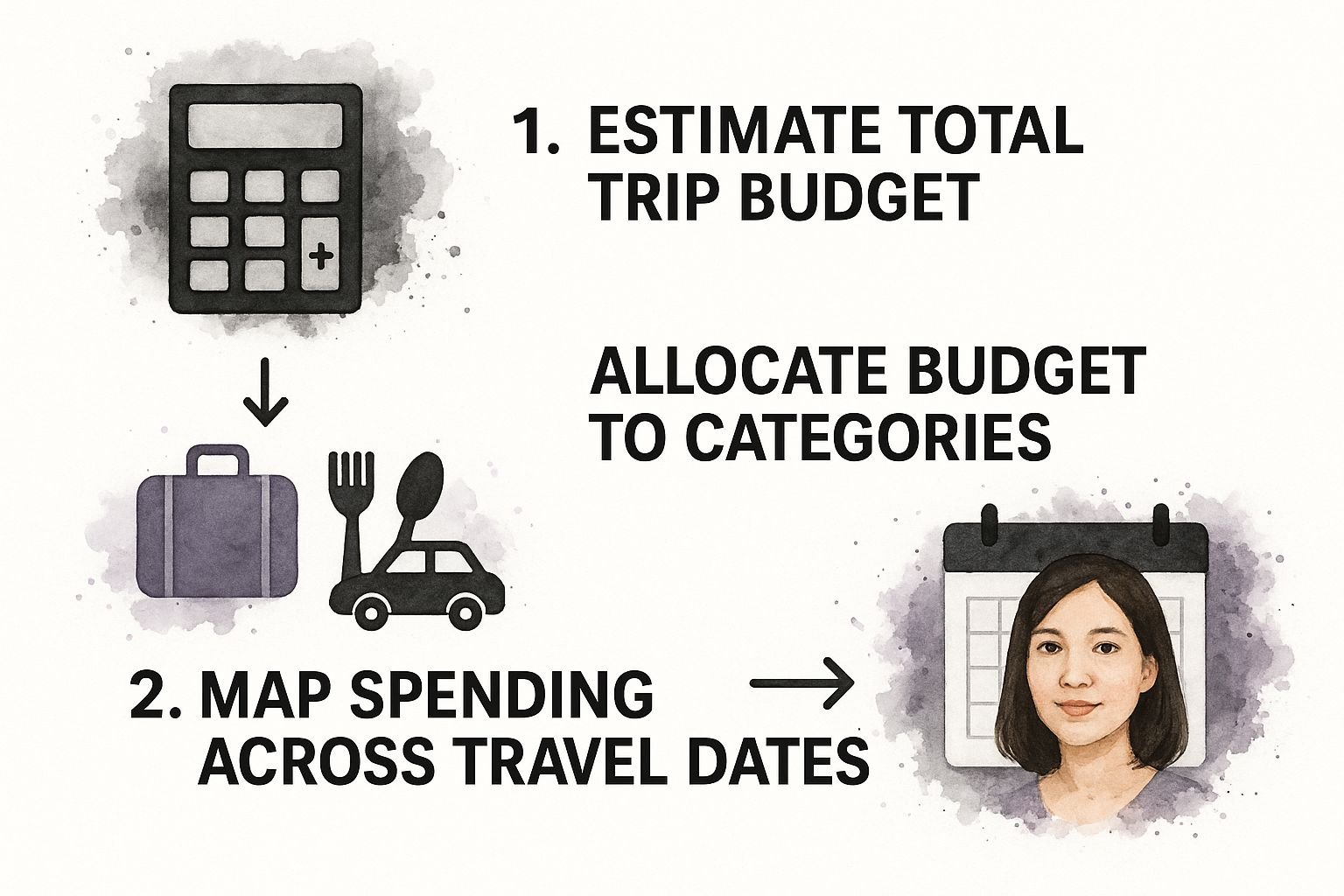
Laying out your spending plan next to your dates is a sanity-saver. It ensures your activities for Tuesday don't accidentally blow your budget for the rest of the week.
Balancing Structure with Spontaneity
Did you notice the pattern in that Rome example? Each day has a big "anchor" activity—something that probably requires a ticket—but the time around it is wide open. This hybrid approach is the real key to a trip you'll actually enjoy. You lock in your must-see experiences, but you leave plenty of breathing room to get wonderfully lost, find a hidden trattoria, or just grab a gelato and watch the world go by in a beautiful piazza.
The best itineraries are not rigid schedules but flexible frameworks. They provide direction without eliminating the joy of discovery. Your blueprint should serve as a compass, not a cage, guiding you toward key experiences while encouraging you to explore the detours.
I get it, this can feel like a lot to put together from scratch. That's why so many travelers are turning to AI tools for a starting point. If you want a solid foundation to customize, a good travel itinerary generator can spit out a themed daily structure just like the one above in seconds. You can then take that AI-generated blueprint and sprinkle in your own research and personality, giving you the best of both worlds: structure and freedom.
Making Smart Booking Decisions

Okay, you've got your day-by-day plan mapped out. Now for the exciting part—making it real by booking your flights, hotels, and key activities. This isn't just about clicking "buy." It's a strategic game that, when played right, can save you a ton of cash and prevent a lot of stress down the road.
Knowing when to book is half the battle. That old advice about booking as far in advance as possible? It's not always true. For flights, there's a definite sweet spot. I've found that booking domestic flights 1 to 3 months out and international trips 2 to 8 months ahead usually lands you the best prices. Go earlier, and you might overpay. Wait too long, and you’re at the mercy of those infamous last-minute price surges.
Where to Book Your Trip
Once you’re in that prime booking window, where do you actually spend your money? You really have two main paths: book directly with the airline or hotel, or use an online travel agency (OTA) like Expedia or Booking.com. They each have their ups and downs.
| Booking Method | Pros | Cons |
|---|---|---|
| Direct (Airline/Hotel) | Customer service is a million times better, changes are easier, and you might get loyalty perks or exclusive offers. | You have to do the legwork, hopping between sites to compare prices. |
| Aggregator (OTA) | Super easy to see a bunch of options at once and often offers tempting flight and hotel bundles. | If something goes wrong, customer service can be a nightmare. Cancellations are often a mess. |
I've developed a hybrid approach that works well for me. I start with the aggregators to do the heavy lifting—finding the best prices and times. But once I have that info, I’ll almost always book directly with the airline or hotel if the price is close. This strategy gives you the powerful search of an aggregator with the security and better service of a direct booking. If you want to dive deeper, you can learn how to find travel deals with a few more insider tricks.
Pre-Booking Activities and Tours
You don't need to schedule every minute of your trip, but some things absolutely must be booked ahead. If you're planning to visit super popular attractions—think the Eiffel Tower, the Colosseum, or a hot Broadway show—booking in advance is a must. If you wait until you get there, you're pretty much guaranteed to see a "sold out" sign.
Here’s a quick list of what you should lock in early:
- Iconic Landmarks: Anything world-famous that requires a timed ticket.
- Specialty Tours: Small-group tours, unique cooking classes, or guided hikes fill up fast.
- High-End Restaurants: If a specific fine-dining experience is on your bucket list, make that reservation weeks (or even months) ahead.
A quick pro tip: Before you click "confirm" on anything, check the cancellation policy. A flexible policy is your best friend if plans go sideways. It's a simple step that buys you peace of mind and protects your wallet.
Finalizing Your Plan and Staying Flexible

With your bookings made and a solid day-by-day outline, you're on the home stretch. This last part is all about getting organized and, maybe more importantly, getting into the right mindset for the journey ahead.
After all, the best-laid travel plans are the ones that are built to bend, not break. Travel is messy, unpredictable, and beautiful, and your itinerary should reflect that.
First things first, get all your ducks in a row. Pull together every flight confirmation, hotel reservation, tour ticket, and car rental agreement. I'm a big fan of using a dedicated app like TripIt to keep it all sorted, but even a simple folder in your Google Drive works perfectly. The goal is to avoid that last-minute panic at the check-in counter where you're frantically scrolling through emails for a booking number.
Your Pre-Travel Checklist
Before you even think about zipping up that suitcase, it’s smart to run through a quick final checklist. These are the little things that often make the biggest difference once you're on the road.
- Secure Travel Insurance: Seriously, don't skip this. From lost bags to unexpected doctor visits, having a safety net is critical. Taking a moment to understand what is covered by your travel insurance can save you from a world of financial headaches.
- Handle Your Money: A quick call to your bank to let them know your travel dates will prevent them from freezing your cards when they see a transaction from another country. I also always make sure to have a small amount of local currency on hand for those immediate arrival expenses, like a taxi or a quick coffee.
- Download Offline Resources: You can't always count on finding reliable Wi-Fi. Before you leave, download offline maps of your destination on Google Maps. It's also a good idea to have digital copies of your passport and other key documents saved directly to your phone.
This final prep stage isn't about trying to control every single moment of your trip—that's impossible. It's about being prepared so you can be a confident traveler, free to soak in the experience instead of getting bogged down by logistics.
Embrace the Art of Flexibility
Now for what I consider the most important part: mentally preparing to go off-script. The magic of travel often happens in the detours—a local festival you stumble upon, a restaurant recommendation from someone you just met, or a rainy day that nudges you into a cozy museum you hadn't planned to visit.
This is where the real adventure is.
A flexible mindset is becoming more essential than ever. We're seeing a huge shift towards more last-minute travel; in fact, there has been a 20% quarterly increase in travelers globally who plan their trips just 0 to 13 days before they leave. This trend, highlighted in recent Q3 2025 travel trend insights, shows just how much people value the ability to adapt and be spontaneous.
Think of your itinerary as a framework, not a set of rules carved in stone. It’s your guide, not your boss.
When an unexpected opportunity pops up, give yourself permission to chase it. Some of my most treasured travel memories are from moments I decided to follow my curiosity instead of my schedule. That ability to improvise is what takes a trip from good to truly unforgettable.
Getting Ahead of Common Itinerary Headaches
No matter how well you map things out, a few classic questions always seem to surface. It's just part of the process. So, let's get ahead of them. Think of this as the FAQ section you'd send to a friend who's feeling a little overwhelmed by all the details.
One of the first puzzles to solve is figuring out just how long to stay in each place. There's no magic number, of course, but after years of trial and error, I've found a good rhythm. Aim for at least two full days in a major city and one full day for smaller towns or villages. This pacing keeps you from burning out and lets you actually absorb the atmosphere instead of just ticking boxes.
A trip shouldn't feel like a checklist. Rushing through five cities in seven days is a recipe for a blurry memory of train stations and hotel lobbies. The real goal is to experience a place, not just see it.
Before we dive into the nitty-gritty, here are some quick answers to the questions I hear most often.
Quick Answers to Your Itinerary Planning Questions
| Question | Brief Answer |
|---|---|
| How long should I stay in each city? | A good rule is 2-3 days for major cities and 1 day for smaller towns to avoid burnout. |
| How do I plan with a group? | Set a shared budget, identify everyone's "must-do" activity, and schedule solo time. |
| What's the best app to use while traveling? | TripIt for auto-organizing, Wanderlog for group collaboration, and Google Maps for visual navigation. |
| Should I book everything in advance? | Book flights and unique accommodations early. Leave some daily activities open for spontaneity. |
These quick tips can help you sidestep some of the most common planning pitfalls right from the start.
How Do You Plan a Trip with a Group?
Let's be honest: planning a trip for more than one person can feel like herding cats. Everyone has different ideas, different budgets, and different energy levels. The secret to making it work is all about communication and compromise before anyone even looks at a flight.
Get everyone together and agree on the fundamentals first. This single step can prevent a world of frustration down the road.
- Set a Shared Budget: Nail down a daily spending range for essentials like lodging and food that everyone is truly comfortable with.
- Identify "Must-Do"s: Have each person pick one or two non-negotiable activities. These become the pillars you build the rest of the itinerary around.
- Schedule Free Time: This is a big one. Build unscheduled blocks into the day. It gives people a chance to recharge, wander off on their own, or just relax without feeling pressured.
- Assign Roles: Make one person the "accommodation captain," another the "restaurant researcher," and so on. Sharing the load makes the work feel lighter and gives everyone a stake in the plan.
Imagine a family trip to Tuscany. Your dad is dreaming of wine tasting, but your sister wants to go on a long bike ride through the countryside. Easy. Schedule them for the same afternoon. That way, everyone gets their perfect day without dragging the others along to something they're not excited about.
What Are the Best Apps for an Itinerary on the Go?
Once your boots are on the ground, fumbling for confirmation emails or addresses is the last thing you want to do. Your phone is your best friend, and a great itinerary app is a game-changer.
The "best" app is the one that clicks with you, but a few consistently rise to the top for their smart features and reliability.
| App | Best For | Key Feature |
|---|---|---|
| TripIt | Automatic Organization | Just forward your confirmation emails, and it magically builds a master itinerary for you. |
| Wanderlog | Collaborative Planning | It’s built for groups, letting everyone add places and notes to a shared plan in real time. |
| Google Maps | Visual Navigation | Save all your destinations on a custom map to instantly see what's nearby and plan your route. |
Choosing the right tool is just as important as the planning itself. A well-organized app frees you up to be present and enjoy the moment, which is what travel is all about. Knowing how to plan a travel itinerary is really about blending smart prep work with the right tools to make your adventure seamless.
Ready to stop researching and start exploring? The People Travels uses smart AI to build a personalized day-by-day itinerary just for you, so you can spend less time planning and more time traveling. Create your dream trip today!