Traveling solo is one of the most enriching experiences you can have, offering a unique blend of freedom, introspection, and adventure. While the idea of navigating the world alone is exciting, it naturally comes with a heightened need for awareness and preparation. Your safety is paramount, and ensuring it allows you to fully immerse yourself in the journey without unnecessary anxiety. This guide is designed to move beyond the usual, generic advice and provide a comprehensive toolkit of actionable solo travel safety tips.
We will delve into seven specific strategies that cover every phase of your trip, from pre-departure research to on-the-ground navigation and emergency preparedness. You will learn practical methods for securing documents, choosing safe accommodations, and maintaining crucial communication links with people back home. Each point is crafted to be a scenario-based, actionable step you can implement immediately. Think of this not just as a list, but as a foundational framework for building confidence and resilience. By mastering these proactive safety measures, you can transform potential vulnerabilities into strengths, ensuring your adventure is memorable for all the right reasons. Let’s begin.
1. Research Your Destination Thoroughly
The most crucial of all solo travel safety tips begins long before you pack your bags: comprehensive, multi-faceted research. This foundational step involves more than just looking up popular attractions; it’s about developing a deep understanding of your destination’s unique environment, cultural norms, and potential risks. Thorough preparation equips you with the knowledge to navigate new surroundings confidently, anticipate challenges, and avoid common pitfalls that can leave unprepared travelers vulnerable.

By investigating everything from local laws to common scams, you transform from a tourist into an informed visitor. This proactive approach allows you to make safer choices regarding accommodation, transportation, and daily activities, significantly reducing your risk profile.
How to Implement This Strategy
Effective research is about consulting a variety of sources to build a complete picture. Start with official channels and then branch out to get on-the-ground perspectives.
- Government Advisories: Begin with official sources like the U.S. State Department’s travel advisories or your home country's equivalent. These sites provide critical information on political stability, crime rates, and health risks. Consider enrolling in programs like the Smart Traveler Enrollment Program (STEP) for real-time alerts.
- Recent Travel Blogs and Vlogs: Supplement official data with recent posts from solo travelers who have visited your destination. These personal accounts offer practical insights into things like neighborhood safety, navigating public transit, and avoiding current tourist traps.
- Local News Outlets: Use a web translator to read local news sources from your destination. This provides an unfiltered view of current events and public sentiment that might not be covered in international travel guides.
- Destination Guides: Reputable guides from sources like Lonely Planet or Rick Steves offer well-researched information on cultural etiquette, tipping customs, and regional safety concerns.
Actionable Examples and Scenarios
Applying this research prevents dangerous and uncomfortable situations. For instance, knowing that ride-sharing apps are safer and more regulated than street taxis in certain Latin American cities can help you avoid express kidnappings or exorbitant fares.
Scenario: Before a trip to Morocco, your research reveals that while violent crime is low, petty theft in crowded medinas is common. You also learn that modest dress is the cultural norm, especially for women visiting religious sites.
Informed Action: You pack cross-body bags with anti-theft features and clothing that covers your shoulders and knees. You remain vigilant in markets and are culturally respectful, which helps you blend in and avoid unwanted attention.
2. Share Your Itinerary with Trusted Contacts
One of the most effective solo travel safety tips is creating a robust external support system before you depart. Sharing a detailed travel itinerary with trusted friends or family members ensures that someone always knows your general whereabouts and planned activities. This simple act creates a crucial safety net, providing peace of mind that if you were to miss a scheduled check-in, someone would be able to take swift and informed action.
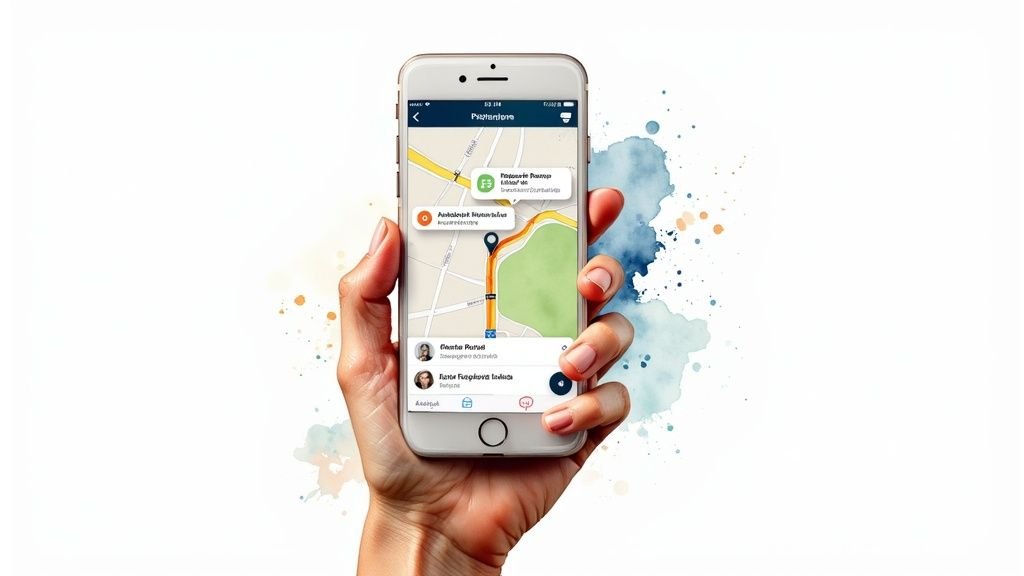
This strategy isn't about constant surveillance; it's about establishing a clear communication plan and providing essential information to your contacts. By giving them a baseline of your movements, you empower them to be an effective advocate for you in an emergency, able to provide authorities with your last known location, travel plans, and important documents.
How to Implement This Strategy
A successful shared itinerary is more than just a list of cities. It's a comprehensive document that provides a clear and actionable overview of your trip. The key is to make this information easily accessible and understandable for your designated contacts.
- Create a Central Document: Use a shared digital document like a Google Doc or a detailed email thread. Include flight numbers, accommodation details with addresses and phone numbers, and any pre-booked tour confirmations. Learn more about how to plan a travel itinerary.
- Establish a Check-In Schedule: Agree on a realistic communication frequency. This could be a quick "I'm safe" text every 24 hours or a brief call every few days. The consistency is more important than the method.
- Share Digital Copies of Documents: Scan or take clear photos of your passport, visa, driver's license, and travel insurance policy. Store them in a secure, shared cloud folder that your emergency contact can access.
- Leverage Location-Sharing Apps: For specific activities like a long hike or navigating a new city at night, use apps like Find My Friends, Google Maps location sharing, or WhatsApp’s live location feature for real-time tracking.
Actionable Examples and Scenarios
This proactive approach provides your network with the exact information they would need to help you in a crisis, saving critical time when it matters most.
Scenario: You are on a multi-day trek in Patagonia, a region with notoriously spotty cell service. You've shared your exact route, the name of your guide company, and your expected completion date with a family member back home. You also agreed to send a message via a satellite communicator at the end of each day.
Informed Action: When your family member doesn't receive your check-in message for two consecutive days, they have all the information needed to act. They can contact the trekking company directly and, if necessary, provide local authorities with your planned route, greatly accelerating any potential search and rescue efforts.
3. Trust Your Instincts and Stay Alert
One of the most powerful yet often overlooked solo travel safety tips is to cultivate and trust your intuition. Your instincts, often described as a "gut feeling," are a primal survival mechanism designed to detect subtle cues of danger that your conscious mind might dismiss. Maintaining heightened awareness of your surroundings and listening to these internal alarms is crucial for recognizing and avoiding potential threats before they can escalate.
This practice involves staying mentally present instead of being lost in thought or distracted by your phone. By actively observing the environment and the people around you, you empower yourself to act decisively when something feels "off," a skill that is indispensable when navigating unfamiliar territories alone. Learning how to manage these feelings is key; you can find helpful strategies to overcome travel anxiety and distinguish intuition from irrational fear.
How to Implement This Strategy
Honing your situational awareness is a skill that can be practiced. It’s about creating habits that keep you engaged with your environment rather than detached from it.
- Practice Active Observation: Regularly take note of your surroundings. Notice the general mood of a street, identify potential exit routes in crowded places, and observe the body language of people nearby.
- Limit Distractions: Avoid wearing headphones with noise-canceling features in both ears, especially when walking alone or at night. Keep phone use to a minimum in busy public areas to ensure your full attention is on your environment.
- Project Confidence: Walk with purpose, keep your head up, and make brief eye contact with passersby. Confident body language can deter potential opportunists who often target those who appear lost, distracted, or vulnerable.
- Moderate Alcohol Consumption: While enjoying local nightlife can be part of the travel experience, excessive alcohol impairs judgment and slows reaction times, making you an easier target.
Actionable Examples and Scenarios
Trusting your gut is not about paranoia; it's about giving yourself permission to prioritize your safety over social niceties or convenience.
Scenario: While exploring a new city, you decide to take a shortcut down a quiet alleyway recommended by your map app. As you enter, you get a sudden, uneasy feeling, even though you can't pinpoint a specific threat.
Informed Action: Instead of ignoring the feeling and proceeding, you trust your intuition. You immediately turn around, backtrack to the main, well-lit street, and take the longer, busier route to your destination, prioritizing your sense of security over efficiency.
4. Keep Important Documents Secure and Accessible
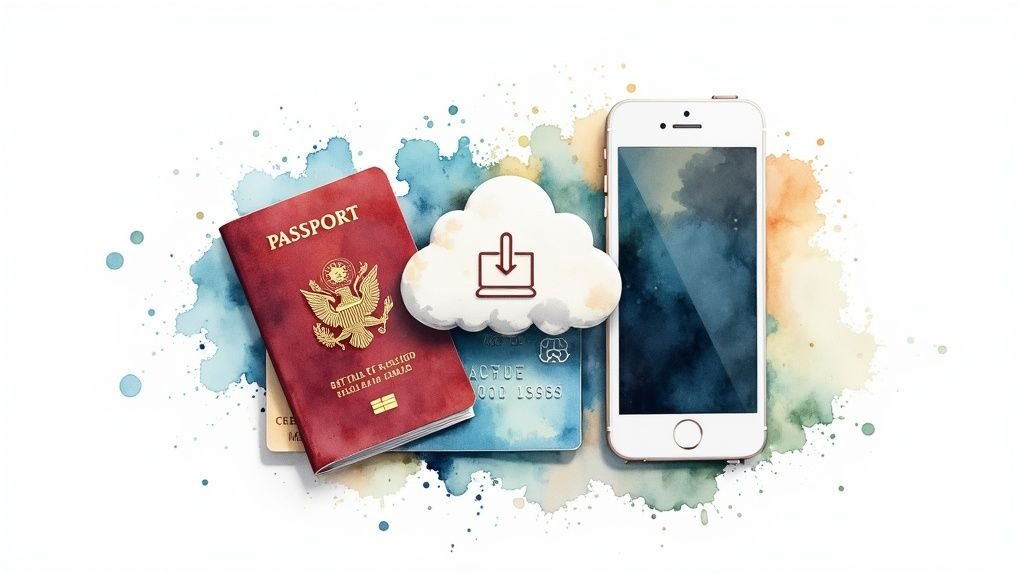
A lost passport or stolen wallet can instantly transform an amazing solo adventure into a bureaucratic nightmare. One of the most critical solo travel safety tips is creating a resilient system for your documents. This strategy is about building redundancy through multiple secure copies, both physical and digital, ensuring that a single incident of loss or theft doesn't derail your entire journey or leave you stranded.
This proactive approach to document management minimizes panic and streamlines recovery. By strategically separating your originals, copies, and emergency cash, you can navigate unexpected challenges with confidence, knowing you have a backup plan ready. Protecting these items is as crucial as knowing how to pack efficiently, as both are foundational to a smooth and secure trip. You can learn more about smart packing on thepeopletravels.com.
How to Implement This Strategy
A robust document safety plan involves diversification. Never keep all your essential items in one place. Instead, distribute them across your person, your luggage, and secure digital storage.
- Create a Digital Backup Vault: Before you leave, scan or photograph your passport, visas, driver's license, credit cards (front and back), and travel insurance policy. Store these images in an encrypted, cloud-based service like Google Drive or Dropbox, protected by a strong password and two-factor authentication.
- Use a Money Belt or Secure Pouch: For daily outings, carry your primary credit card, a form of ID, and some cash in a concealed money belt or anti-theft pouch worn under your clothes. This keeps your most valuable items invisible and out of reach for pickpockets.
- Leave Copies with a Trusted Contact: Email a copy of your digital backup vault to a reliable friend or family member at home. In a worst-case scenario where you lose your phone and all physical copies, they can send the necessary information to you.
- Utilize Hotel Safes: Store your physical passport, backup credit cards, and extra cash in your hotel room's safe. Only carry a photocopy of your passport or a different form of ID when you are exploring.
Actionable Examples and Scenarios
This system of separation and redundancy prepares you for high-stress situations, enabling a swift and calm response. It turns a potential trip-ending disaster into a manageable inconvenience.
Scenario: While navigating a crowded market in Barcelona, a pickpocket manages to steal your wallet from your backpack. It contained your primary credit card, driver's license, and a significant amount of cash.
Informed Action: You are frustrated but not panicked. Your passport, a backup credit card, and emergency cash are locked in your hotel safe. Your phone has digital copies of your stolen cards, allowing you to quickly call the banks to cancel them. You can continue your trip with minimal disruption using your backup resources.
5. Choose Accommodations Wisely
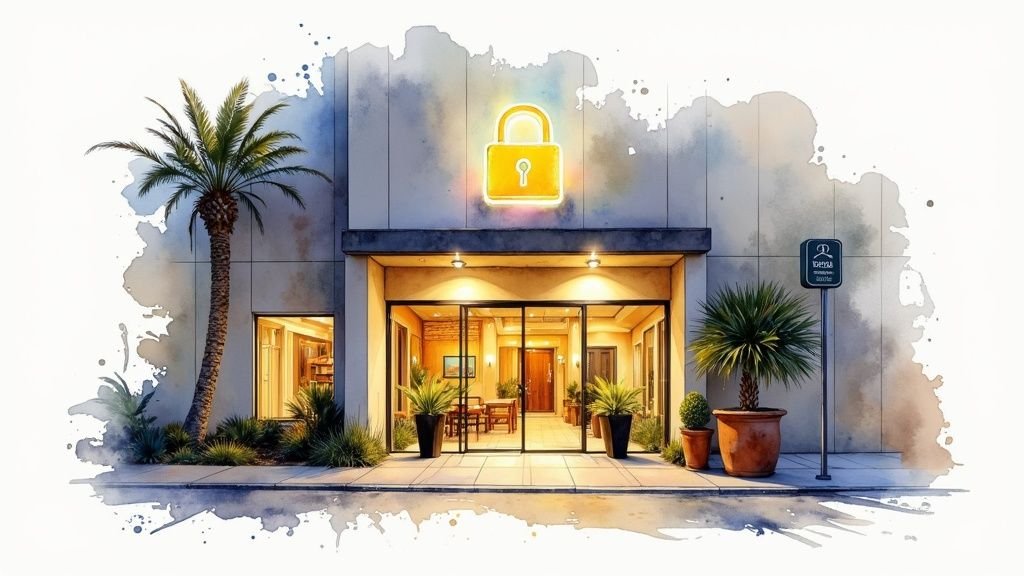
Your choice of accommodation is more than just a place to sleep; it's your safe haven and home base in an unfamiliar location. Selecting safe and appropriate lodging is a fundamental pillar of solo travel safety. This process involves a critical evaluation of neighborhoods, property safety features, and the reliability of booking platforms, ensuring your sanctuary is secure and well-situated for your travel needs.
By prioritizing security features and location, you actively reduce risks such as theft, harassment, or feeling isolated in an unsafe area. A well-chosen accommodation provides peace of mind, allowing you to recharge and explore with confidence.
How to Implement This Strategy
A multi-layered approach to vetting accommodations is key. Look beyond price and aesthetics to focus on security, location, and verified user experiences.
- Read Recent, Verified Reviews: Focus on reviews from the last six months, specifically from other solo travelers. Platforms like Hostelworld and Booking.com often allow you to filter reviews. Look for comments on neighborhood safety (especially at night), staff helpfulness, and the security of rooms and lockers.
- Analyze the Location: Use Google Maps and Street View to virtually explore the area. Is it well-lit? Are there other businesses and foot traffic nearby? Check its proximity to public transportation, but also consider the safety of the walk from the station to your door.
- Verify Safety Features: Check the property description for key safety features. A 24-hour reception, key card access to floors or rooms, in-room safes, and secure luggage storage are all excellent indicators of a security-conscious establishment.
- Leverage Community Wisdom: Join online communities like solo female travel groups on Facebook. Members often provide honest, unfiltered recommendations for guesthouses and hotels where they have personally felt safe.
Actionable Examples and Scenarios
Making an informed lodging choice can be the difference between a restful night and a stressful, potentially dangerous situation. Incorporating this step into your planning is a non-negotiable part of your solo travel safety plan. For more detailed guidance, see this comprehensive guide on how to plan a solo trip on thepeopletravels.com.
Scenario: You are planning a solo trip to a major European city. You find a budget-friendly Airbnb that looks great in photos but has only a few vague reviews. You also find a slightly more expensive hotel located next to a major metro station with hundreds of recent, positive reviews mentioning its 24-hour front desk and well-lit surroundings.
Informed Action: You opt for the hotel. Despite the higher cost, the verified safety features and prime location provide security and convenience, allowing you to return late from dinner or a show without worrying about a long, dark walk through an unfamiliar neighborhood.
6. Maintain Regular Communication
One of the most effective solo travel safety tips is creating a robust communication plan with someone back home. Establishing a reliable check-in routine ensures that someone always knows your general whereabouts and well-being. This safety net is invaluable, providing peace of mind for both you and your loved ones and creating a system for a swift response if you ever deviate from your plans unexpectedly or find yourself in an emergency.
This strategy transforms loved ones into a remote safety team. By sharing key details and sticking to a schedule, you create a monitoring system that can detect potential issues early. It’s a simple yet powerful way to ensure you are never truly "off the grid," even when exploring the most remote locations.
How to Implement This Strategy
A successful communication plan is consistent, clear, and has built-in redundancies. The key is to make it a manageable habit that you can stick to throughout your trip, regardless of your activities or location.
- Schedule Consistent Check-ins: Agree on a realistic frequency for contact, whether it's a quick "good morning" text via WhatsApp, a daily email, or a weekly video call. The schedule should work for both your itinerary and your contact's time zone.
- Share Your Itinerary: Before you leave, provide a primary contact with a detailed copy of your itinerary, including flight numbers, accommodation details, and planned tour information. Update them with any significant changes as you go.
- Use Location-Sharing Technology: For specific activities like a long-distance bus ride or a solo hike, use the live location-sharing features on apps like Google Maps or WhatsApp. This provides real-time tracking for a limited period.
- Establish Emergency Protocols: Agree on a specific protocol if you miss a check-in. For example, your contact might wait a few hours before trying alternative contact methods, then reach out to your hotel, and finally contact local authorities or your embassy after a predetermined amount of time has passed.
Actionable Examples and Scenarios
This proactive communication can be the difference between a minor inconvenience and a serious crisis. It ensures that a search or assistance can be initiated quickly and efficiently.
Scenario: You are on a multi-day trek in Patagonia with limited cell service. You informed your family that you would send a message via your satellite communicator every evening. One night, you fail to check in.
Informed Action: Because you established a clear protocol, your family waits the agreed-upon 12 hours before taking action. When they still haven't heard from you, they contact the trekking company with your itinerary details and last known coordinates. The company is able to dispatch a guide to your location, discovering you have a minor sprained ankle and need assistance, resolving the situation far more quickly than if no one knew to look for you.
7. Have Emergency Plans and Resources Ready
While thorough research can prevent many issues, one of the most vital solo travel safety tips is preparing for the unexpected. Having a comprehensive emergency plan and readily accessible resources is non-negotiable when you are your own primary support system. This proactive preparation involves creating clear protocols for medical, financial, and logistical crises, ensuring you can act decisively and effectively when stress is high and time is critical.
This strategy transforms potential disasters into manageable situations. By pre-identifying solutions and contacts, you minimize panic and confusion, allowing you to navigate emergencies with a clear head and a pre-determined course of action. It's the ultimate safety net for any solo traveler.
How to Implement This Strategy
A robust emergency plan covers multiple domains. It’s a toolkit you build before your trip that includes financial safeguards, communication plans, and critical local information that could save you valuable time in a crisis.
- Financial Redundancy: Never rely on a single source of money. Carry at least two different credit/debit cards from different networks (e.g., Visa and Mastercard) and a hidden stash of emergency cash in both US dollars and the local currency.
- Comprehensive Travel Insurance: Purchase a policy that includes not just medical coverage but also emergency medical evacuation, trip cancellation, and lost luggage. Before you leave, thoroughly review the procedure for making a claim. You can learn more about what is travel insurance coverage on thepeopletravels.com to make an informed choice.
- Communication Plan: Designate a primary emergency contact at home and provide them with your full itinerary, copies of your passport, and insurance details. Pre-program local emergency numbers (police, ambulance) and your country's embassy contact information into your phone.
- Local Resource Mapping: For each location on your itinerary, identify and save the address and phone number of the nearest reputable hospital, police station, and your country’s embassy or consulate.
Actionable Examples and Scenarios
This preparation is what makes the difference between a minor inconvenience and a full-blown crisis. It empowers you to handle difficult situations independently and efficiently.
Scenario: While hiking alone in a remote area of Peru, you take a fall and suffer a suspected fracture. You have limited cell service and are far from the nearest town.
Informed Action: Your emergency plan kicks in. You use your satellite messenger, which you packed for remote travel, to send an SOS with your GPS coordinates. Your pre-purchased travel insurance includes medical evacuation, and you have the policy number and emergency hotline saved offline. While waiting for help, you can contact your designated family member to coordinate with the insurance company on your behalf.
7 Key Solo Travel Safety Tips Comparison
| Item | Implementation Complexity 🔄 | Resource Requirements ⚡ | Expected Outcomes 📊 | Ideal Use Cases 💡 | Key Advantages ⭐ |
|---|---|---|---|---|---|
| Research Your Destination Thoroughly | Moderate – requires time and effort | Low – mainly time and online sources | Informed decisions, reduced risks | Pre-trip planning, unfamiliar or high-risk areas | Prevents misunderstandings, boosts confidence |
| Share Your Itinerary with Trusted Contacts | Low – requires discipline | Low – smartphone/apps | Enhanced safety net, quicker emergency response | Trips with no travel companions | Peace of mind, accountability |
| Trust Your Instincts and Stay Alert | Low to Moderate – ongoing mental effort | Minimal – personal awareness | Early threat detection, improved decision-making | Solo exploration, culturally unfamiliar locations | Heightened safety through mindfulness |
| Keep Important Documents Secure and Accessible | Moderate – needs organization | Moderate – storage tools and backups | Rapid recovery from loss, reduced trip disruption | Any trip requiring ID and funds | Stress reduction, emergency readiness |
| Choose Accommodations Wisely | Moderate – requires research | Variable – depends on lodging choice | Safe lodging, peace of mind | Booking stays in new or high-risk areas | Secure base, local assistance |
| Maintain Regular Communication | Low to Moderate – needs discipline | Low to Moderate – communication tools | Immediate alerts, remote monitoring | Long trips, risky activities | Improved emergency response, reassurance |
| Have Emergency Plans and Resources Ready | High – extensive pre-trip preparation | Moderate to High – insurance, emergency funds | Crisis readiness, reduced panic | Adventure travel, remote or high-risk destinations | Comprehensive coverage, rapid response |
Your Next Safe Adventure Awaits
Embarking on a solo journey is one of the most enriching experiences a person can have. It’s a powerful declaration of independence, a chance to connect with the world on your own terms, and an opportunity for profound self-discovery. The solo travel safety tips we've explored are not designed to instill fear, but to build a foundation of confidence that allows you to fully embrace every moment of your adventure.
Safety in travel is not about building walls around your experience; it's about giving yourself the tools to navigate new environments with intelligence and awareness. By mastering these strategies, you shift from being a passive tourist to an active, empowered explorer. You learn to move with purpose, make informed decisions, and handle unexpected challenges with a calm, prepared mindset.
Key Pillars of a Secure Solo Trip
As you move forward, remember the core principles that underpin every safe journey. These aren't just items on a checklist; they are active habits that become second nature with practice.
- Proactive Preparation: Your safety journey begins long before you board the plane. Thoroughly researching your destination, understanding local customs, and identifying potential risks are non-negotiable first steps. This foundational knowledge is your first line of defense.
- Situational Awareness: The most crucial tool you carry is your intuition. Trusting that gut feeling when a situation feels off, staying alert to your surroundings, and projecting a confident posture can deter unwanted attention and help you avoid precarious scenarios.
- Layered Security: Redundancy is your best friend. From having digital and physical copies of your documents to diversifying where you keep your cash and cards, layered security ensures that a single mishap, like a lost wallet, doesn't derail your entire trip.
- Strategic Communication: A well-informed contact back home is your lifeline. Sharing your itinerary, scheduling regular check-ins, and having an emergency communication plan provides a vital safety net, ensuring someone always knows your general whereabouts.
Turning Knowledge into Action
The value of these solo travel safety tips lies in their application. As you plan your next adventure, actively integrate these concepts. Don't just read about emergency contacts; create a detailed communication plan. Don't just think about securing documents; purchase a travel-safe wallet or bag and practice using it.
By adopting this proactive and strategic approach, you're not just planning a trip; you are investing in your own well-being and resilience. This preparation is what transforms anxiety into anticipation, allowing you to focus on the joy of discovery, the thrill of the unknown, and the incredible personal growth that only solo travel can offer. Your next adventure isn't just a destination on a map; it's a testament to your capability, courage, and preparedness.
Ready to put these safety tips into action with a flawlessly planned itinerary? Let The People Travels be your smart travel partner. Our AI-powered platform builds a personalized, day-by-day plan based on your interests and safety priorities, so you can explore with confidence. Plan your next secure and unforgettable solo journey with The People Travels today.